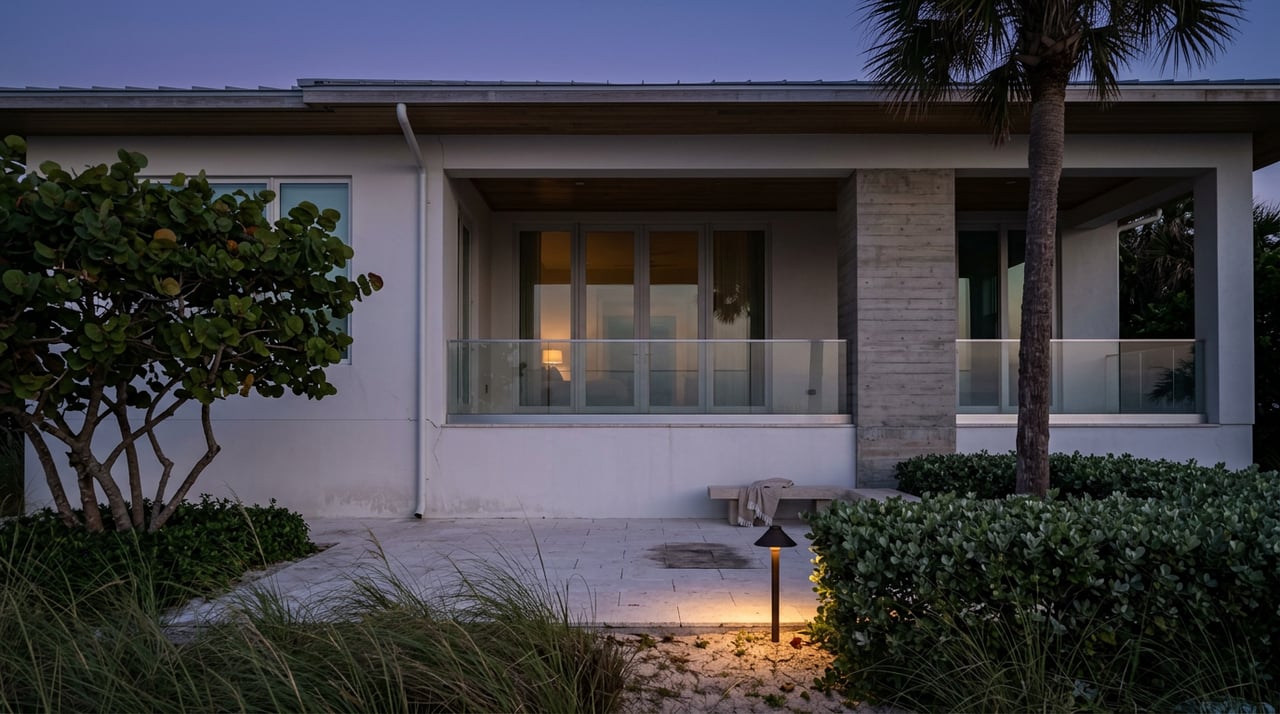
Walk the sand along Gulf Shore Boulevard or Lowdermilk Park after dinner this week and you will notice two things. First, stretches of beach are marked off with stakes and tape, sitting quiet against the tideline. Second, condo buildings that usually glow from top to bottom after dark are running with half their balcony lights off, curtains pulled, exterior fixtures dimmed or aimed away from the water. Most residents assume this is just what August looks like on a Florida beach town, part of a long nesting season that started back in spring. That assumption is only half right, and the half that is missing is the part worth understanding.
Mid-August is not a random slice of a six-month season. It is the narrow window where two different phases of sea turtle activity overlap on the same stretch of sand, and this year that overlap is happening on top of the busiest nesting season Southwest Florida has recorded in recent memory. The stakes and the dark balconies you are seeing right now carry more weight than they would in an ordinary year, because there is simply more happening underneath the surface of that sand than usual.
Why mid-August is the hinge point, not just a mid-point
The City of Naples marks its official nesting window from April 15 through October 31, with females coming ashore to lay eggs as late as August in a typical year. Hatching runs on its own separate clock, beginning in June and continuing through late October. That means from June onward, the two processes are running side by side on the same beach, nesting females still arriving some nights while nests laid earlier in the summer are cracking open on others. Mid-August sits deep inside that overlap, closer to its peak than its edges.
That is the part a lot of summer beach chatter skips. Nesting season and hatching season get talked about as one long stretch, but they are two separate processes on two separate clocks, and this is the stretch of the year when a beachfront resident is most likely to see a nesting crawl one night and a hatchling emergence a few nights later, on the same patch of sand.
A record year, stacked on top of the usual timing
What makes this August different from a routine one is the volume behind it. Statewide, Florida's loggerhead count had already reached 94,667 nests by the end of June 2026, the highest total recorded at that point in the season across the past five years, while leatherback nests hit 2,152 over the same stretch, also an unprecedented pace for the state (NewsNation, July 2026). Southwest Florida beaches are part of that surge, not exceptions to it. Sanibel, less than an hour up the coast and monitored by a conservation program with decades of nest data behind it, had logged 922 loggerhead nests by August 12, breaking its own previous single-season record of 878 set in 2023.
Naples has its own long history of tracking this activity up close. The Conservancy of Southwest Florida has monitored nesting on nearby Key Island for decades, going back to research programs from the 1980s that first mapped how often individual loggerheads return to lay eggs across a season. That kind of sustained, local monitoring is exactly why a record year here reads as a real signal rather than a guess. When the baseline comes from decades of counted nests on the same stretch of coast, a number like this one means something.
Put plainly, more nests laid earlier in the summer means more hatchlings emerging now, all compressed into the same few weeks that were already the seasonal overlap point. The math is not complicated. More eggs in June and July means more cracked shells and more disoriented hatchlings trying to find the water in August, at the exact moment some of the year's last nesting females are also on the sand.
The dark balconies are working, not just decorative
Here is the piece that runs against the assumption a lot of residents carry about a built-up beachfront like Naples. The instinct is to think that a coastline lined with condo towers and beach homes must mean more artificial light, and more light must mean worse outcomes for nesting turtles trying to find a dark, quiet stretch of sand. The local reporting this season tells a different story. Naples-area condo groups tracking their own buildings this year have reported a decline in false crawls, the term for when a female turtle emerges from the water, moves partway up the beach, and turns back without nesting because something about the site did not feel safe. Fewer false crawls means more females are finding the beach quiet enough, and dark enough, to complete a nest rather than abandon the attempt.
That is not an accident. It reflects real coordination, building by building, on turning off landscape lighting, closing blinds facing the Gulf after sunset, and keeping accent lights off exterior walkways during the season. The City of Naples backs this with its own marine turtle protection ordinance, which spells out expectations for beachfront lighting during nesting months, from repositioning fixtures away from the sand to using shielded, long-wavelength bulbs when replacement is needed. A dark balcony in August is not a building running a summer discount on its electric bill. It is one household holding up its end of a system that is measurably working this season.
What that means for your evening walk this month
None of this requires residents to change how they live near the beach. It just means the next few weeks are worth a little extra awareness on an evening walk.
- Skip the flashlight and the flash photography if you come across a nesting turtle or a hatchling making its way to the water. Any bright light source can pull a disoriented hatchling toward a parking lot or a road instead of the Gulf.
- Fill in any holes dug earlier in the day before you leave the beach. A hatchling that falls into an unfilled hole can lose the energy it needs for the swim offshore.
- Take chairs, coolers, and tents off the sand before dark. Gear left overnight becomes an obstacle course for a female trying to nest or a hatchling trying to reach the water.
- If a beachfront room faces the Gulf, close the blinds after sunset and keep interior lights low or off in rooms that are not in use. Interior light through a window reads the same to a disoriented hatchling as a streetlamp.
- If you spot a sea turtle or hatchling that looks distressed, do not approach or handle it. The Florida Fish and Wildlife Conservation Commission takes reports at 1-888-404-FWCC, and that is the right first call.
None of these habits are new, but their timing matters more this particular month than it will in October or next April. A record nesting year has front loaded more activity into the same few weeks that were already the season's busiest overlap, and the choices made on individual balconies this month are landing directly on top of that surge.
The bigger picture for anyone who lives here
Living near the water in Naples means living alongside a piece of coastal ecology that has been quietly recovering and, this year, setting records. The stakes in the sand and the dimmed balconies are not seasonal decoration. They are the visible edge of a system involving city ordinance, condo association coordination, and decades of conservation tracking, all converging on the same few hundred yards of beach at the same time you are.
If you are the kind of person who notices details like this on an evening walk and finds yourself curious about how they connect to life on this stretch of coast, that is exactly the kind of local knowledge Alex King Group is built around. Work With Alex.